|
|
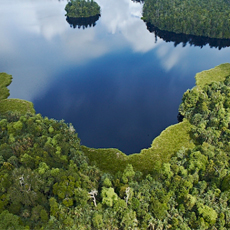
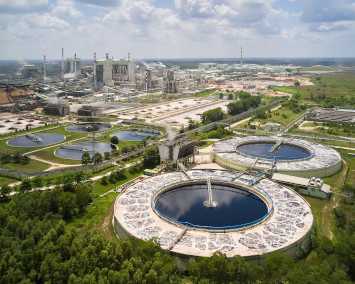
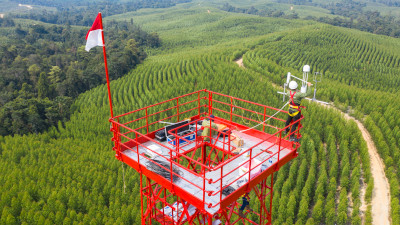
Responsible Operations in the Lowlands The participants were taught the key principle of APRIL's Water Table Management System for maintaining the optimum water table level that balances the requirements for tree root development and the natural eco-physiological condition of the site. This is achieved through the operation of a series of water gates to control the water levels within the canal network. On top of a control system, APRIL has also established sedimentation ponds at selected points in the canal network to trap and hold sediments that may otherwise be carried into the streams, rivers and lakes and impact the quality of these water bodies. Observation stations and sampling apparatus are established at selected points in the canal network to monitor critical parameters, such as water levels, stream discharge properties, flooding, water quality, peat subsidence, soil properties, erosion and sedimentation, and fire incidence. Plans remain firm for the development and protection of the Kampar Peninsula, a lowland area in Riau, Indonesia, which continues to deteriorate due to illegal logging and encroachment. This deforestation causes carbon outflow due to the absence of proper hydrological and ecological management. APRIL's concept of a "plantation ring" around the Kampar Peninsula offers the most viable management option. The proposal covers a moratorium on current activities in the 300,000-hectare inland "core" of the Peninsula, and the development of an Acacia plantation ring on the largely degraded and fragmented perimeter to prevent access to the "core" by illegal loggers and encroachers. |